Asia-Pacific Tours
Questions 1–10
Complete the table below.
Write ONE WORD AND/OR A NUMBER for each answer.
Asia-Pacific Tours
Activity Holidays
| Tour | Details | Cost |
|---|---|---|
| Example Vietnam |
|
4 £ |
| Hong Kong |
|
£1,320 |
|
£1,800 |
Dancing Course and Community Centre
Questions 11 and 12
Choose TWO letters, A–E.
Which TWO items will participants on the dancing course receive when they check in?
Questions 13 and 14
Choose TWO letters, A–E.
Which TWO activities will take place on the first afternoon and evening?
Questions 15–20
Label the plan below.
Choose the correct letter, A–I, next to questions 15–20.
The community centre
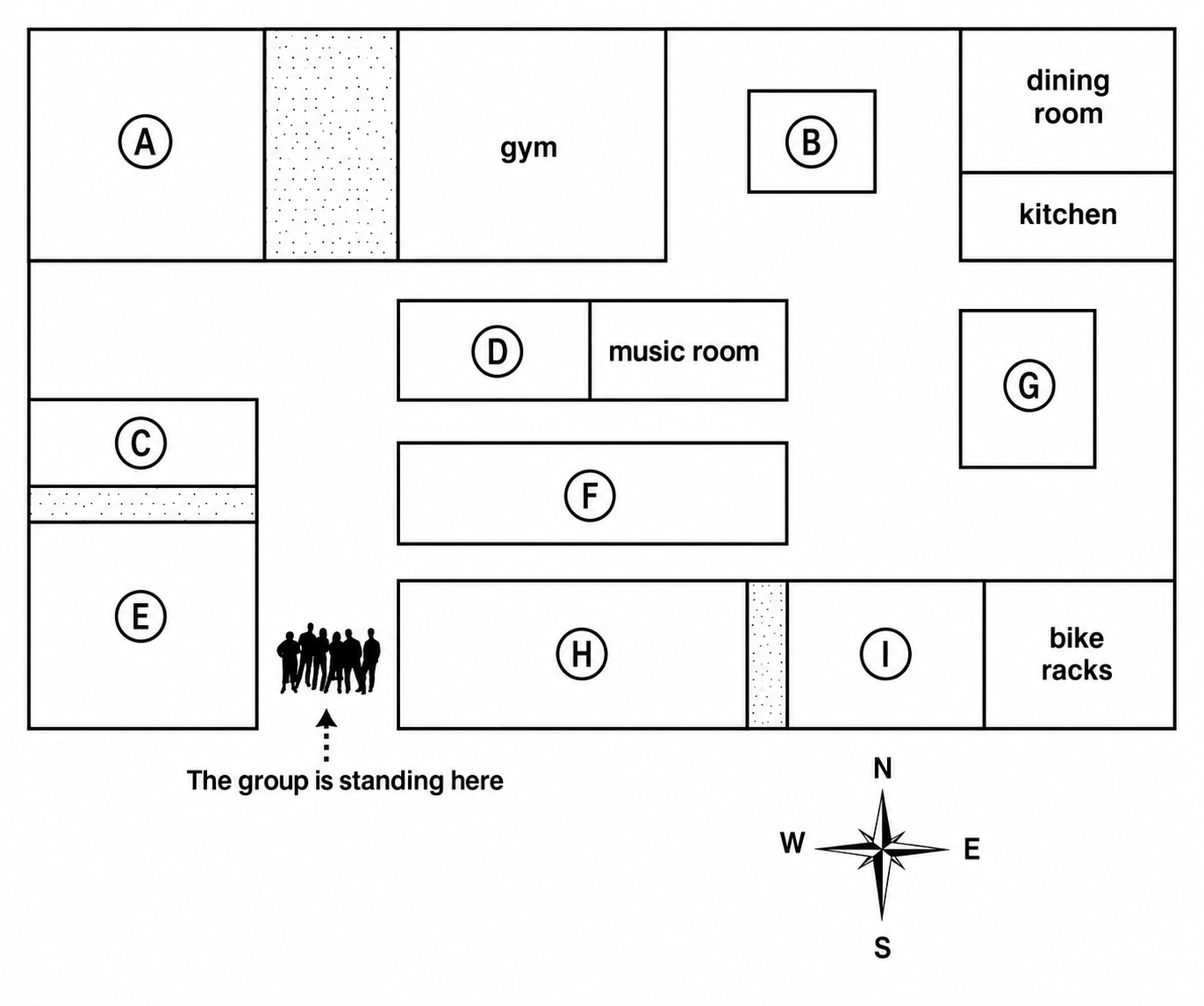
| A | B | C | D | E | F | G | H | I | |
|---|---|---|---|---|---|---|---|---|---|
| 15 the bathrooms | |||||||||
| 16 the bunkrooms | |||||||||
| 17 the games room | |||||||||
| 18 the hall | |||||||||
| 19 the medical room | |||||||||
| 20 the reception office |
Innovative Environmental Solutions
Questions 21–25
Choose the correct letter, A, B or C.
Innovative Environmental Solutions
21 According to Dominic, what is surprising about the supermarket garden project?
22 What do the speakers identify as a possible problem with the solar carpark idea?
23 According to the speakers, the unexpected benefit of wildlife crossings is that
24 What is impressive about the 100% renewable energy campaign?
25 What positive point about “carrot-mobbing” does Ella describe?
Questions 26–30
Complete the flow-chart below.
Choose FIVE answers from the box and select the correct letter, A–H, next to questions 26–30.
Aerial Reforestation Process
Canadian Maple Syrup
Questions 31–40
Complete the notes below.
Write ONE WORD ONLY for each answer.
Canadian maple syrup
Description
- • It is a sweet liquid poured over pancakes etc.
- • The production of sap needs a climate where night and day temperatures are very
History
- • Folk stories claim that maple syrup was first used to cook
- • Sap collection in spring developed into a First Nations
- • The sap was collected in buckets.
- • The sap was concentrated into syrup by
- – using hot stones to produce
- – leaving it outside at night and then removing the layer of on top.
Uses
- • First Nations people drank the fresh sap to give them energy.
- • European settlers put the syrup in various types of
- • They also used it for drinks and for candy.
- • Its use for making sugar declined after 1880, when the on Caribbean sugar was removed.
Threats
- • Natural
- – Harvests may be affected by storms and destructive
- – Climate change may also affect sap production.
- • Social
- – Maple syrup is expensive and faces considerable
- – The obesity issue is affecting sales.
Reasons for optimism
- • Maple syrup is an important export.
- • It is quite compared with other sweeteners.
- • Its taste is the main reason for its popularity.